Deer and roe deer can cause serious damage to crops, vineyards, fruit trees, vegetable plots and gardens. They browse shoots, leaves and young plants, can damage newly planted trees and, in some cases, put an entire harvest at risk. In many rural areas their presence has become more visible in recent years, increasing problems for farmers, estate owners and private gardens.
The good news is that they can be kept away with non-harmful deterrent methods, without injuring the animals. To choose the right deer repeller, roe deer repellent or solution for browsing damage, consider the surface to protect, the type of damage and the moment when animals enter the plot or garden.
Which product to choose to repel deer and roe deer
| Situation |
Recommended product |
Why it fits |
| Estates, vineyards, extensive crops or large surfaces |
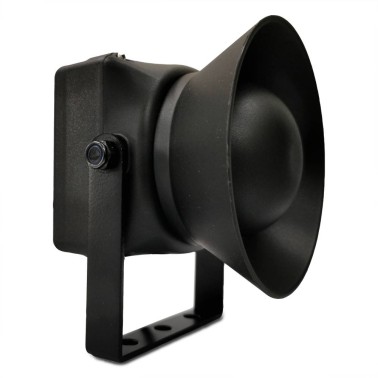
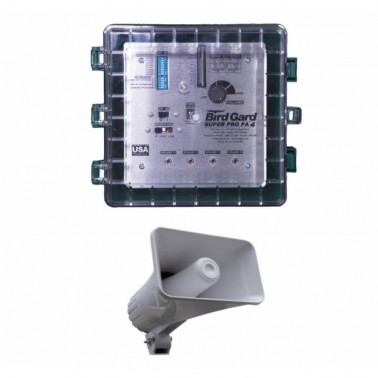
Super Pro PA4 - Boar, Deer, Rabbit Repellent |
Audible sound device with a deer-specific chip and indicative coverage of up to 2.4 hectares in favourable conditions. |
| Presence of deer, roe deer or other wild animals on rural land |
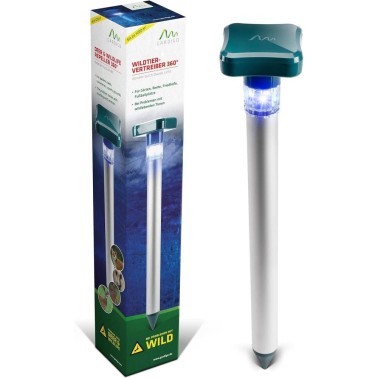
Wild Animal Repeller – BS-20L WILD 1 |
Audible sound device for wildlife. It can be useful when the problem is not limited to deer and also includes other animals in the field. |
| Night entry or activity at dawn and dusk |
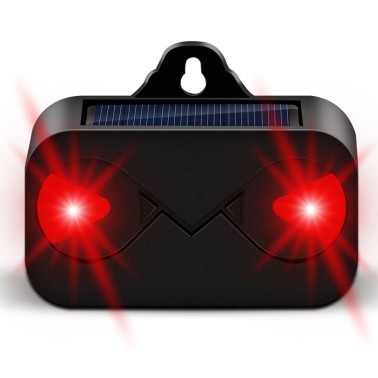
Blue Light Wildlife Repellent or Wild Animal Repeller with Flashing Red Light |
Flashes help deter animals active at night or twilight by simulating presence in the protected area. |
| Protection of shoots, fruit trees, hedges, vineyards or specific plants |
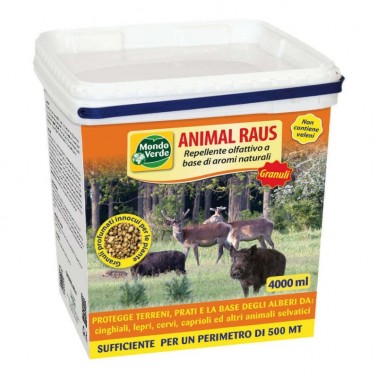
Wild Boar Deer Repellent |
Natural repellent that gives plants an unpleasant taste, helping reduce browsing by deer, goats and other animals. |
| Gardens, small vegetable plots or areas with a water supply |
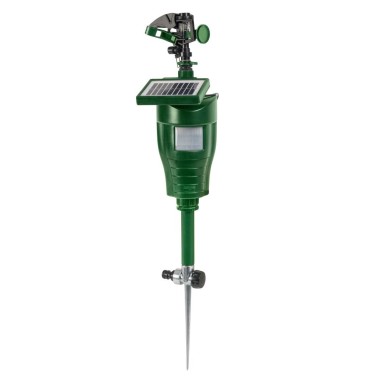
Motion Activated Sprinkler |
Detects movement and activates a water jet that surprises the animal. It is very useful for specific garden or vegetable plot areas. |
| Risk of collision with deer or other animals on the road |
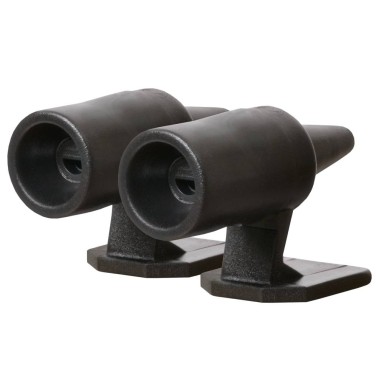
Deer Whistle for Car |
Emits ultrasound and helps reduce the risk of collision with deer, wild boar, rabbits and other animals while driving. |
How to repel deer and roe deer
There is no single foolproof method for every case. Deer and roe deer have good hearing, are cautious and can get used to stimuli that are always repeated in the same way. For that reason, the best strategy in many cases is to combine several deterrent methods and reinforce the entry points or the times of greatest risk.
For estates, extensive crops, vineyards or large surfaces, audible sound repellers are usually the reference option because they offer greater coverage. For gardens, small vegetable plots or specific areas, taste repellents, light devices or the motion activated sprinkler may be more practical.
Sound repellers for estates, vineyards and large crops
Audible sound is the most suitable method when a large surface needs protection. These devices reproduce alarm calls or sounds of hostile animals that deer interpret as a sign of danger, helping them avoid the protected area.
The Super Pro PA4 - Boar, Deer, Rabbit Repellent is one of the most suitable options for estates and crops, as it can work with a deer-specific chip and offers indicative coverage of up to 2.4 hectares in favourable conditions. Real coverage can vary depending on terrain, vegetation, obstacles, speaker direction, wind and animal pressure in the area.
Another option for rural environments is the Wild Animal Repeller – BS-20L WILD 1, especially when the problem includes deer, roe deer or other wild animals on a farm or estate.
You can see more solutions of this type in the Sonic Pest Repellers category.
Light deterrents for night activity
Deer and roe deer are often very active at dawn, at dusk and during the night. In these situations, light deterrents can be a useful reinforcement because flashes simulate presence and create a visual signal that can make the animal avoid the area.
The Blue Light Wildlife Repellent can cover up to 1,200 m² and is designed for animals such as deer, rabbits, foxes, raccoons and wild boar. The Wild Animal Repeller with Flashing Red Light can also be considered, especially as a complement in gardens, vegetable plots, chicken coops or rural areas.
These devices usually work best as reinforcement for other methods, especially when the problem happens at night or when animals always enter through a specific point. You can see more options in Deterrent Lights.
Repellents to protect shoots, fruit trees, hedges and specific plants
When the main problem is deer, roe deer or goats browsing shoots, hedges, young fruit trees, vineyards or specific plants, it can be more effective to act directly on the vegetation you want to protect.
The Wild Boar Deer Repellent is a natural repellent that creates an unpleasant taste for animals. It helps protect plants, shoots and crops from nibbling, and can also be useful against goats and other browsing livestock.
This type of repellent fits especially well in specific zones: young trees, hedges, ornamental plants, vegetable plots, vineyards or sensitive crop lines. You can see more options in the Repellents category.
Motion activated sprinkler for gardens and small vegetable plots
In gardens, small vegetable plots or areas with an available water supply, the Motion Activated Sprinkler can be a very persuasive solution. The device detects movement and activates a water jet that surprises the animal without harming it.
It is especially useful for protecting specific points: an entrance to the vegetable plot, a usual passage, a lawn area, a flower bed or a place where deer or roe deer repeatedly approach. You can see similar solutions in Water-based Animal Repellers.
Physical barriers against deer and roe deer
Physical barriers can help, but it is important to distinguish between local protection and a barrier that is truly effective against deer. Deer can jump high, so an effective fence must be tall, continuous and properly installed.
For these animals, the truly effective physical barrier is usually a high fence adapted to the terrain. In gardens, estates or crops with high pressure, fencing can be an important complementary measure alongside sound, light or taste repellents.
You can see more options in the Physical Barriers category.
Car deer whistle: reducing collision risk with deer
In rural areas, secondary roads or places with frequent wildlife, deer, roe deer and wild boar can create an accident risk. For this case, the Deer Whistle for Car emits ultrasound and helps reduce the risk of collision with deer and other animals on the road.
This product is not designed to protect a crop or estate, but for vehicle use. You can see more solutions of this type in the Ultrasonic category.
How to prevent deer from getting used to the repeller
Deer and roe deer can get used to a stimulus if it is always the same, if it always comes from the same point or if they perceive no real risk associated with it. In areas with high pressure, it is best not to depend on a single fixed method.
To maintain effectiveness over time, we recommend using varied sounds, changing the direction or location of the device when necessary and combining methods such as sound, light or taste repellents. It is also important to reinforce protection during sensitive periods such as budding, flowering, fruit ripening or planting young trees.
Another useful strategy is to identify the usual entry points and protect those areas first. In many cases, it is not necessary to cover the entire estate evenly, but to act on the routes animals use to access the crop.
Which method to use depending on the type of damage
| Type of damage or situation |
Most suitable method |
| They enter a large estate or extensive crop |
Audible sound repeller, with broad coverage and varied sounds. |
| They mainly enter at night |
Combine sound with blue or red light to reinforce night deterrence. |
| They eat shoots, young fruit trees, hedges or specific plants |
Natural taste repellent applied to the vegetation you want to protect. |
| They enter a garden or small vegetable plot |
Motion activated sprinkler, repellent or light, depending on the entry point. |
| There is a collision risk on the road |
Deer whistle for car. |
| You want a physical barrier |
Tall, continuous and well-installed fencing, especially if deer or roe deer pressure is high. |
Damage, legality and non-harmful approach
When crops are damaged, remember that deer and roe deer are game species, and that population control through hunting or captures belongs to hunting management and the competent authorities. What BirdGard Iberia offers are non-harmful deterrent methods to protect crops, estates and gardens without injuring animals.
We do not recommend using poison against deer or roe deer. Besides being cruel and indiscriminate, it can be dangerous for livestock, pets, wildlife and the environment. This information is for guidance only and does not constitute legal advice. If in doubt, consult the competent authority.
Frequently asked questions about repelling deer and roe deer
How can deer and roe deer be kept away from crops?
For large surfaces, the most recommended option is usually an audible sound deterrent, reinforced with light if entry happens at night. To protect specific plants, a taste repellent can be used. Combining two methods and varying the location helps prevent animals from getting used to them.
What is the best method for a large estate?
Audible sound is usually the main option because it can cover large surfaces with little maintenance. On estates with high pressure, it can be combined with night light or repellents in the most sensitive areas. If you describe the terrain, we can help size the solution.
What smell repels deer?
Natural deer repellents work by creating an unpleasant taste or smell on the plants you want to protect. They are not intended to harm the animal, but to make shoots, hedges, fruit trees or crops less attractive for browsing.
How can young fruit trees be protected from deer?
For young fruit trees, hedges or specific plants, it is usually useful to apply a taste repellent to the vegetation and reinforce the area with light or sound if animals enter repeatedly. In high-pressure areas, physical protection for the trees may also be necessary.
What should I do if deer enter at night?
If deer enter at night, reinforce visual deterrence with blue or red light devices, especially at the usual entry points. In large estates or crops, this can be combined with an audible sound device.
Does a motion activated sprinkler work for deer?
Yes, it can be useful in gardens, small vegetable plots or areas with a water supply. The sprinkler detects movement and activates a water jet that surprises the animal. It is not the best option for large estates, but it can work well at specific points.
Does the repellent also work for goats or sheep?
Yes. A taste repellent can also work against goats and other browsing livestock because it makes plants unpleasant to the palate. It is a good option for protecting hedges, fruit trees or specific crops from nibbling.
Do deer get used to repellers?
They can get used to them if the stimulus is always the same. That is why it is advisable to use devices with varied sounds, change direction or location when necessary and combine methods such as sound, light or taste repellents.
Which repeller should be used to avoid accidents with deer on the road?
For road use, a deer whistle for car can be used. It is designed to emit ultrasound and help reduce the risk of collision with deer, wild boar, rabbits and other animals while driving.
Is it legal to use poison against deer?
No. Deer and roe deer control belongs to hunting management and the competent authorities. Poison is neither a legal nor recommended solution, and it can pose a risk to livestock, pets, wildlife and the environment.
Solutions for repelling deer and roe deer at BirdGard Iberia
At BirdGard Iberia you will find animal-friendly solutions for repelling deer and roe deer: sound, light, taste repellents, water, barriers and car solutions. If you are not sure what best fits your estate, crop or garden, Contact Us and we will advise you free of charge.

 5 reviews